Should You Repair or Replace the Hardscaping Around Your Pool?
The area near your pool takes a beating. Sun, chlorine, freeze-thaw cycles, and constant foot traffic wear down even well-built hardscaping over time. When cracks or uneven spots appear, the question becomes whether a repair will hold or if it’s time to start fresh.
Minor cracks, stains, and loose joints in pool hardscaping can usually be repaired. Widespread cracking, sinking, drainage failures, or safety hazards near the pool’s edge typically call for replacement. The right choice depends on the extent of the damage, the age of the materials, and whether repairs would cost close to what a full replacement would.
Blade Cutters Landscaping understands your family and guests love your outdoor living space and want it to look and function at its best.
What Types of Pool Hardscape Damage Can Usually Be Repaired?
Small, isolated problems are often fixable without tearing out the whole area. Common repairable issues include:
- Hairline cracks in individual pavers or concrete sections
- Surface stains from algae, rust, or chemical exposure
- A few loose or shifted pavers that have lost their base support
- Faded or worn sealant that needs reapplying
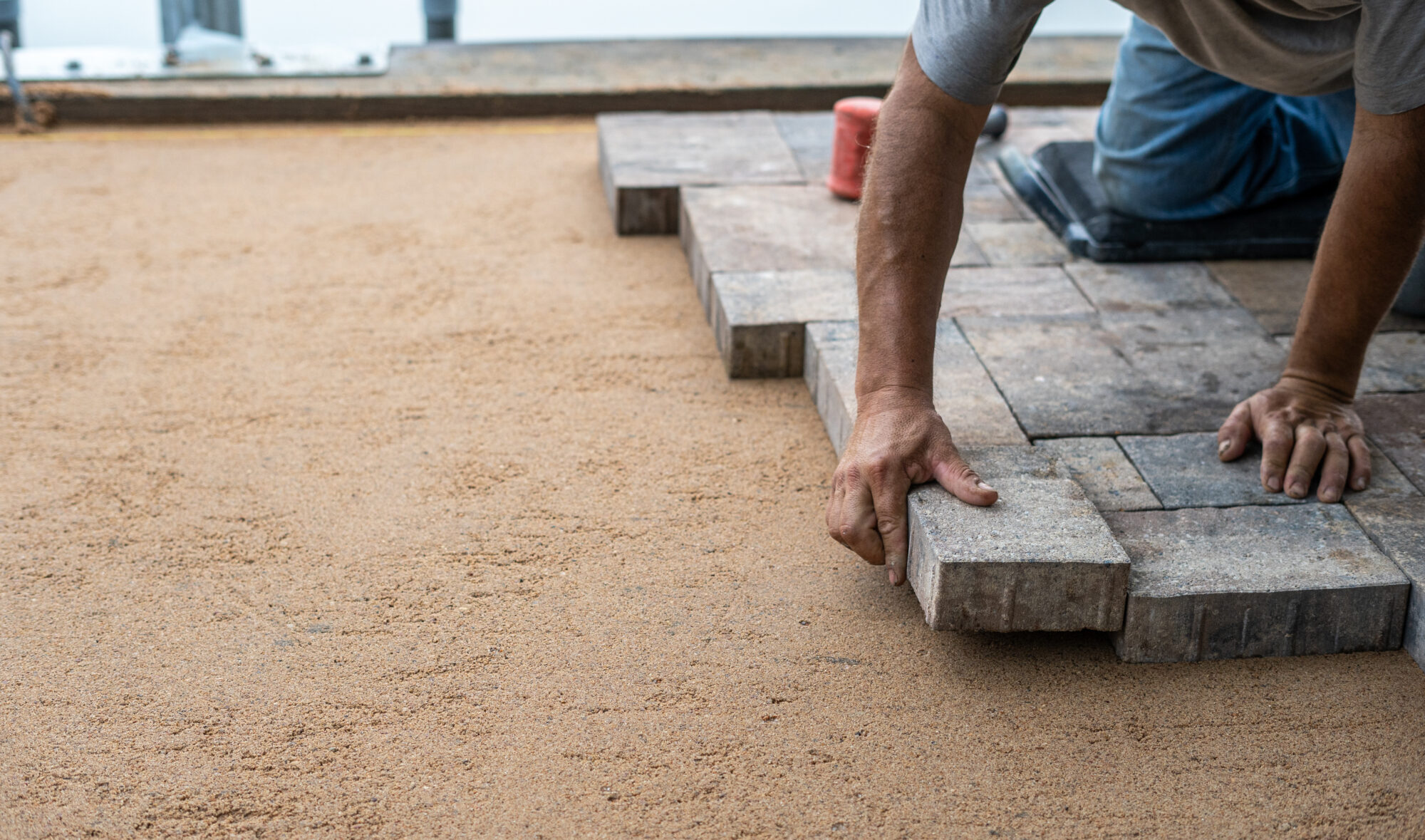
If the damage is contained to a small area and the base beneath the hardscaping is still stable, a targeted repair can restore both function and appearance. Paver systems have an advantage here: individual stones can be lifted, releveled, and reset without disturbing the surrounding surface.
What Signs Indicate the Pool Hardscaping Needs to Be Replaced?
Replacement becomes the better option when damage spreads beyond a few isolated spots. Watch for these warning signs:
- Cracks that run across multiple pavers or large sections of concrete
- Crumbling concrete that exposes aggregate underneath
- Hardscaping that has pulled away from the pool coping or structure
- Repeated repairs to the same area within a short time frame
Safety matters too. Uneven surfaces around a pool create a real tripping hazard, especially where bare feet and wet conditions are involved. If patch jobs keep failing or the surface feels unstable underfoot, the underlying structure has likely reached the end of its service life.
How Do Drainage Problems, Sinking, and Uneven Surfaces Affect the Decision?
Surface damage is often a symptom of something happening below the hardscaping. Poor drainage allows water to pool against the base material, which erodes the soil underneath and leads to settling. Once a section starts to sink, the pavers or concrete above it will keep shifting, no matter how many times it’s patched.
Uneven surfaces caused by this kind of settling are a strong signal that the problem lives beneath the hardscaping, not just on top of it. In these cases, replacement allows for correcting the base, grading the area for better runoff, and in some cases installing permeable materials that let water drain naturally instead of collecting against the foundation. Repairing the surface alone without addressing drainage usually leads to the same issue returning within a season or two.
How Should You Compare the Cost and Expected Lifespan of Repairing Versus Replacing the Hardscaping?
Repairs are generally less expensive upfront, which makes sense for small, isolated issues. But if damage is widespread or keeps recurring, the cost of repeated patch jobs can add up to a significant portion of what a full replacement would cost, without extending the hardscaping’s life by much.
Replacement costs more initially but resets the clock on the entire surface. A well-installed hardscape, built with proper base preparation and quality materials, can last well over a decade with routine care.
When weighing the two options, consider how much of the hardscaping is affected, how old the installation is, and whether the underlying base has been compromised. If damage is isolated and the foundation is sound, repair makes sense. If the problems keep returning or stem from drainage and sinking issues, replacement offers a more lasting solution.
Getting a Clear Picture of Your Pool Hardscaping’s Condition
A visual inspection only tells part of the story. Checking how the hardscaping drains after rain, whether any sections feel soft or shift underfoot, and how long ago repairs were last made can help clarify whether you’re looking at a quick fix or a larger project. Connect with the Blade Cutters Landscaping team to take a close look at your hardscaping.